

Choosing a dog bed seems simple until you start shopping. Round or rectangular? Soft fiberfill or supportive foam? A cozy bagel bed or a flat mat that fits inside a crate? And what size should you buy when two dogs of the same weight can have completely different builds and sleeping habits?
This dog bed buying guide walks through those decisions one at a time. You'll learn how to measure your dog, compare common bed shapes, understand cushioning materials, choose options for puppies and older dogs, and decide when a custom-size bed makes sense. Along the way, we'll point you to Majestic Pet's existing guides so you can explore a topic without having to guess.
Quick Answer: How Do You Choose the Best Dog Bed?
Recommended Dog Beds by Sleeping Style
| If Your Dog... | Recommended Bed Type |
|---|---|
| Curls up | Bagel Bed |
| Stretches out | Rectangle Bed |
| Likes head support | Lounge/Bolster Bed |
| Uses a crate | Crate Mat |
| Needs extra support | Orthopedic Bed |
| Wants a personalized touch | Personalized Bed |
| If You Need... | Recommended Bed Type |
|---|---|
| Exact dimensions | Custom Dog Bed |
| Non-standard crate | Custom Orthopedic Crate Mat |
| Built-in kennel | Custom Dog Bed |
Use these recommendations as a starting point. Head support means a raised place to rest the head, not a medical benefit; compare each bed’s usable dimensions and construction.
Start with five factors:
- Measurements and weight. Measure your dog's body and compare those dimensions with the bed's usable sleeping surface—not just its outside dimensions.
- Sleeping style. Does your dog curl into a ball, stretch across the floor, lean against a cushion, or switch positions throughout the night?
- Age and preferences. Consider whether your dog prefers easy entry, a raised edge, a flatter surface, or a particular feel underfoot.
- Cushioning and construction. Compare foam and fiberfill, thickness, cover design, seams, and how the bed holds its shape.
- Location and care. Think about crate fit, room size, washable components, moisture exposure, and everyday maintenance.
If you only do two things before shopping, measure your dog and watch how your dog sleeps. Those observations will usually tell you more than a breed label or a weight chart alone. Start with the Majestic Pet Dog Bed Size Guide, then return here to choose a style and construction.
1. Understand Your Dog's Sleeping Style
Dogs are wonderfully individual sleepers. Some tuck their noses beneath their tails; others spread out as though they own the entire sofa. Many change positions several times in a single nap. The goal is to choose a bed that accommodates the positions your dog actually uses, not the pose you wish your dog would adopt.
Dogs that curl up
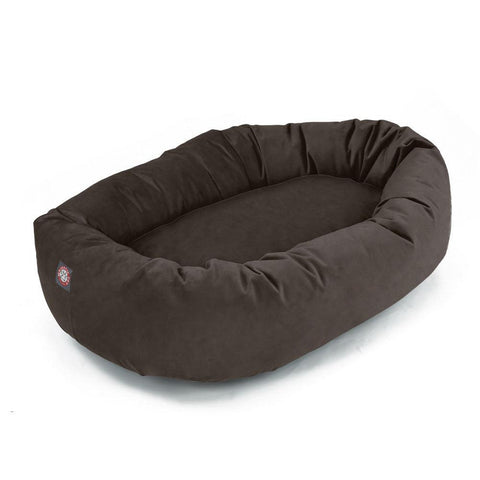
A dog that regularly sleeps in a tight circle may enjoy a round bed with a defined perimeter. Bagel-style beds have raised, filled edges and a center resting area. That shape creates a cozy, enclosed-feeling place to settle. A circular bed can also work well in a corner or beside a favorite chair, provided the inner sleeping area is large enough.
Dogs that stretch out
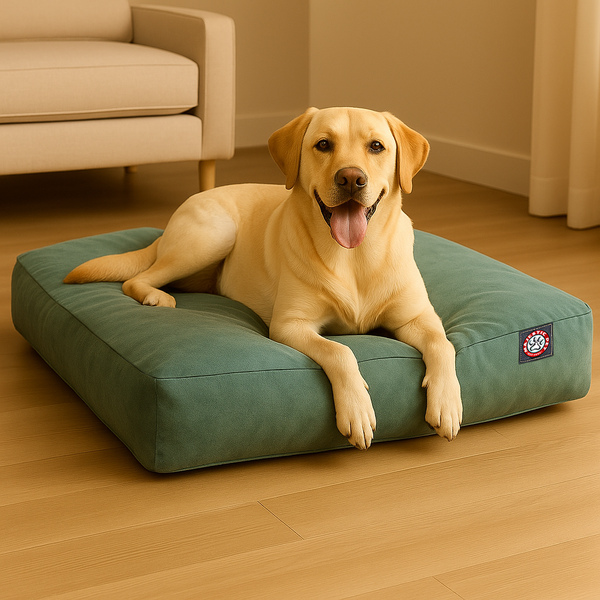
Some dogs lie on their sides with all four legs extended. Others prefer to lie flat on their stomachs. These sleepers often benefit from rectangular beds or generously sized beds that offer uninterrupted space. A bed's outside dimensions can be misleading when a thick bolster takes up several inches on each side. Compare the inner cushion area with your dog's stretched-out length.
Dogs that lean or rest their heads on an edge
A bolster bed provides a raised surface where a dog can rest its head or lean while relaxing. Some dogs use the edge like a pillow; others simply like having a boundary behind their backs. A bolster is a comfort preference, not a guarantee of medical neck support. Consider whether the edge is soft or firm, how high it sits, and whether your dog can enter the bed easily.
For a raised-edge option, explore our Contemporary Lounge beds. Compare the inside cushion dimensions with the overall footprint before choosing a size.
Dogs that sleep in several positions
Practical test: Observe three or four naps in different locations. Note the widest position, the most common position, and whether your dog seeks a pillow-like edge. Those observations will make the next step—sizing—much easier.
2. Choose the Correct Dog Bed Size
One of the most common shopping mistakes is choosing a bed by weight alone. Weight matters for some construction considerations, but it does not tell you how much sleeping surface your dog needs. A long, lean dog and a compact, broad dog may weigh the same amount while requiring different dimensions.
How to measure your dog
When your dog is standing naturally, measure from the tip of the nose to the base of the tail to get a useful starting length. Also consider your dog's height and width, especially if you're choosing a bed with raised sides. Then observe your dog lying in the position that takes up the most space. This resting measurement is especially helpful for dogs that stretch out.
Add a comfortable margin rather than choosing a bed that matches the measurement exactly. The appropriate margin depends on the shape and your dog's habits. You want enough space to turn around and reposition without continually falling off the edge. For a bolster or bagel bed, compare the inside sleeping area rather than relying on the outside diameter or length.

Why product dimensions matter
A bed advertised as large is not necessarily comparable to another brand's large. Sizes are not standardized across every shape or manufacturer. A round bed's diameter, a rectangular bed's length, and a crate mat's footprint describe different kinds of usable space. Read the product dimensions for the specific style you are considering.
Use the size guide before you buy
The Dog Bed Size Guide and Calculator is the best next step when you are comparing Majestic Pet sizes. Use it alongside the dimensions on the individual product page. If your dog falls between two sizes, compare the actual sleeping area and your dog's preferred position rather than automatically selecting the smaller option.
3. Compare the Main Types of Dog Beds
Custom Dog Beds: When Standard Sizes Don't Work
A standard size is a useful starting point, but sometimes neither the dog nor the available space matches it. A custom dog bed lets you consider those two requirements together: enough usable room for your dog and a footprint that works where the bed will sit. It is a sizing choice, not a promise that a particular construction is right for every dog.
For oversized breeds, begin with the sleeping position that takes up the most room. A long dog may need more length without needing an equally large increase in width. Compare that resting footprint with standard options first. If none provides enough usable space, explore Custom Dog Beds and review the available shapes, fills, and dimensions.
Custom kennels, built-in cabinetry, and furniture nooks present a different challenge. Measure the inside resting area, including narrow points, trim, hinges, and door clearance. A bed that fits the opening still needs to give your dog enough room to settle and reposition. Allow for removing the bed and cover for cleaning, and avoid filling a space so tightly that the bedding obstructs access or ventilation.
RVs, campers, and boats may have compact floor areas, curved corners, or irregular sleeping spaces. Measure the intended location rather than copying a household bed size. Check whether the available custom shape can accommodate it; custom length and width do not automatically mean that every contour can be made. Bedding also does not replace an appropriate travel restraint or carrier.
For non-standard crates, measure the actual interior floor or tray and check the door opening before selecting thickness. The Custom Orthopedic Crate Mat is an option to compare when a standard mat does not fit. Review the current product specifications and confirm unusual shapes or clearance requirements before ordering.
Bed shape influences how a dog settles, how the bed fits in a room, and how easily it can be cleaned or moved. The comparison below is a starting point, not a ranking. Several styles may suit the same dog.
| Bed style | Often a good fit for | Main consideration |
|---|---|---|
| Bagel or donut | Dogs that curl up and enjoy a defined edge | Check the interior resting diameter |
| Bolster | Dogs that lean or rest their heads on raised edges | Check bolster height and usable cushion area |
| Rectangular or flat | Dogs that stretch out or change positions often | Allow enough full-body length and width |
| Orthopedic foam | Owners who prioritize a consistent, supportive resting surface | Compare foam type, thickness, and construction |
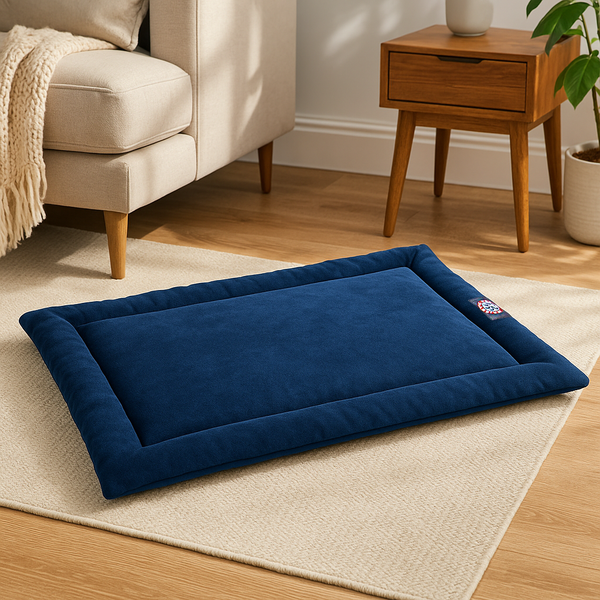
| Crate mat | Dogs resting in crates, kennels, or some travel setups | Measure the actual crate floor and door clearance |
| Personalized | Owners who want a name or distinctive look | Check available styles, sizes, and customization details |
Dog Bed Types at a Glance
| Bed Type | Often Suited For | Main Feature |
|---|---|---|
| Bagel Bed | Curlers | Cozy raised edge |
| Rectangle Bed | Stretchers | Maximum sleep space |
| Lounge Bed | Dogs that lean | Head and body support |
| Orthopedic Bed | Senior dogs | Structured cushioning |
| Crate Mat | Kennels and travel | Precise fit |
| Personalized Bed | Gifts and aesthetics | Custom appearance |
| Custom Dog Bed | Unique spaces | Exact-fit dimensions |
These are general style descriptions, not medical claims. “Head and body support” refers to surfaces a dog can lean against or rest on. Usable space, fit, and cushioning depend on the specific product and the measurements you choose.
Bagel and donut beds
A bagel bed's rounded, raised perimeter gives dogs several places to settle against. It can be especially appealing for curl-up sleepers, but size still matters. A dog that occasionally stretches should have enough space in the center to move comfortably. Look at the overall diameter and the center opening separately.
The Majestic Pet Suede Bagel Bed is one example to compare when considering this style. Check its listed sleeping dimensions before choosing a size.
Orthopedic foam beds
The term orthopedic is commonly used for beds designed around supportive foam. Because construction differs from product to product, look beyond the label. Review the foam specifications, thickness, usable surface, and cover design. A foam bed can be a good choice for owners who want a more structured cushion, but it should not be presented as a treatment for arthritis or another medical condition.
For a specific foam option, compare the Villa Memory Foam Dog Bed with your dog’s measurements and preferred resting surface.
4. Orthopedic vs. Standard Dog Beds: What Changes?
An orthopedic dog bed is usually distinguished by its cushioning construction, often including a foam layer intended to provide a more consistent resting surface. A standard stuffed bed may rely on loose fiberfill or another soft material. Neither category is automatically right for every dog.
For older dogs, dogs that seem stiff, or dogs with known joint conditions, comfort and ease of access deserve extra attention. A well-fitting, stable bed may be helpful as part of a comfortable home environment, but a bed is not a substitute for veterinary advice. If your dog has persistent pain, difficulty standing, or changes in mobility, ask your veterinarian about appropriate care and resting arrangements.
To understand the differences in more detail, read Memory Foam vs. Fiberfill Dog Beds. When shopping, compare the construction described on each actual product page rather than assuming every bed with an orthopedic label is built the same way.
Shop orthopedic dog beds or compare memory foam rectangle beds for a flat resting surface.
5. When Should You Consider a Custom-Size Dog Bed?
Standard sizes work for many dogs, but they do not fit every dog or every space. Custom sizing becomes especially valuable when the bed must fit an unusual footprint or when your dog's body dimensions fall outside common size ranges.
Nonstandard crates and kennels
Crates vary in their internal measurements, even when their labels sound similar. A custom-size mat can help when a standard mat leaves an awkward gap or folds against the sides. Measure the inside floor, not the exterior crate dimensions, and check the door opening, corners, and any tray or lip that changes the available space.
Majestic Pet offers a Custom Orthopedic Crate Mat experience for shoppers who need a more precise fit. Review the customization instructions and current specifications before ordering. For step-by-step measuring help, see How to Measure a Dog Crate for a Mat.
When custom sizing is not necessary
If a standard bed gives your dog enough usable sleeping room and fits your home, a custom size may not be needed. Compare the standard options first. For unusual dimensions, explore our custom-size dog beds.
Buying tip: Measure twice and review the final entered dimensions carefully. Custom-made items may have different return or modification policies, so confirm the current terms before checkout.
6. Choose the Best Dog Bed for a Puppy
Puppies grow, chew, explore, and occasionally have accidents. That means the most practical puppy bed is not always the one that looks the coziest in a photograph. Think first about supervision, cleaning, and how quickly your puppy is changing size.
Washable covers or components can be particularly useful during house training. Check the manufacturer's instructions, because not every bed or insert can be washed the same way. Inspect bedding regularly for loose threads, torn fabric, or exposed fill, especially if your puppy chews. Remove damaged bedding and supervise as appropriate.
If you're using a crate, the crate itself should be appropriately sized for the puppy and introduced positively. Bedding should fit safely without interfering with the door or creating excessive bulk. Our guide to Choosing Puppy Crate Bedding goes into those decisions in more detail.
Remember that some puppies may not be ready for soft bedding during unsupervised crate time if they actively chew or ingest fabric. Follow your veterinarian's or qualified trainer's advice when safety is a concern.
7. Choosing a Dog Bed for Senior Dogs
As dogs age, their routines and preferences can change. A dog that once jumped happily onto a high cushion may begin choosing lower surfaces. Another may still enjoy a raised edge for resting its head. Watch what your dog does now rather than relying on the style that worked years ago.
Prioritize access
Look at how easily your dog can step onto and off the bed. A tall bolster on every side may be inconvenient for a dog with limited mobility. A low-entry design or a flatter surface can be easier to approach. Also consider whether the bed slides on your flooring. A stable placement away from busy walkways can help make the resting area more predictable.
Know when to seek veterinary advice
New stiffness, limping, reluctance to stand, or trouble getting comfortable should not be explained away as a bedding problem. Your veterinarian can help identify the cause and advise on appropriate care. A comfortable bed supports your dog's daily routine; it does not treat underlying disease.
For many senior dogs, the best bed is simply one that combines an appropriate surface, manageable entry height, enough space to reposition, and easy maintenance.
8. Finding the Right Bed for Large Breeds
Large dogs need more than a product labeled XL. Their body length, shoulder width, and preferred positions determine how much space is genuinely useful. A Labrador Retriever that curls up tightly may use a different bed shape than a Great Dane that sleeps fully extended.
For a large dog, begin by measuring the longest sleeping position you commonly see. Check that the bed provides enough length and width without requiring the dog to fold its legs unnaturally. If the bed has raised sides, subtract the space taken by those sides from the advertised outside dimensions.
A good large-dog purchase is one where both measurements agree: the bed fits the dog, and the bed fits the home.
For a dog that curls up, the Majestic Pet Villa Bagel Dog Bed is a product to compare in the available larger sizes. Check its interior sleeping area rather than assuming a large or extra-large label is sufficient.
Compare our large dog beds and extra-large dog beds, checking the usable sleeping area of each style.
9. Crate Mat vs. Traditional Dog Bed: Which Is Better?
The answer depends on where the bedding will be used. A traditional dog bed can be ideal in a living room, bedroom, or office. A crate mat is designed around the confined dimensions of a crate or kennel. One is not inherently better; each solves a different problem.
A crate mat should sit reasonably flat on the crate floor. If it is too large, it may bunch, curl at the edges, or interfere with the door. If it is too small, it may leave more bare floor than you intended. Start with the actual internal floor measurements and compare them with the mat's stated dimensions.
For travel, check the carrier or crate manufacturer's instructions and any transportation requirements. Do not assume a household dog bed is suitable for every vehicle or travel arrangement.
If you are deciding what to buy, see How to Measure a Dog Crate for a Mat and Choosing Puppy Crate Bedding. If a standard dimension is not right for your crate, explore the Custom Orthopedic Crate Mat.
10. Understand Dog Bed Materials and Construction
Two beds can look almost identical in photographs while feeling and performing differently. To make a confident choice, look beyond the outer shape and read what the product is actually made of.
Memory foam and other foam constructions
Foam provides a more continuous cushion than loose fill. Memory foam is often described as contouring to pressure, but the exact feel depends on formulation, thickness, and any additional layers. Some products combine different foams. Check the specifications for the actual bed rather than assuming all foam constructions behave alike.
Fiberfill and plush construction
Fiberfill beds can offer a soft, nest-like feel. They are common in rounded and bolstered styles, where the fill creates a puffy perimeter. Because loose fill may redistribute over time, pay attention to stitching, compartments, and whether the bed can be reshaped according to its care instructions.
Cushion thickness and density
Thickness is visible; density is not. A thick cushion may still compress considerably, while a thinner construction may feel more structured. Product specifications and realistic photographs are more informative than a single height measurement. Where available, compare the stated foam type, fill, and design rather than relying on marketing adjectives.
Removable and washable covers
A removable cover can simplify routine cleaning, particularly in busy households. Before buying, verify whether the cover is removable, whether the insert can be washed, and what temperatures or drying methods are allowed. A removable cover does not mean the entire bed is machine washable.
Browse washable dog beds and follow the care instructions for the specific style you choose.
Replacement covers and inserts
Shop replacement covers and inserts to check available matches for your existing bed.
Before replacing an entire bed, check whether the cushion is still in good condition and whether a compatible cover or insert is available. Replacing a worn cover may be more economical than buying a new bed, but a severely flattened or damaged cushion may need replacement as well. See Replacement Dog Bed Cover or New Bed? for a more detailed decision guide.
11. Waterproof vs. Water-Resistant Dog Beds
These terms are easy to confuse, and the distinction matters when you're buying for a puppy, an older dog, or a bed that may encounter moisture.
Water-resistant generally means a material is designed to resist some moisture exposure. It does not necessarily prevent liquid from passing through under prolonged contact, pressure, or at seams. Waterproof indicates a stronger barrier claim, but the specific construction still matters: an outer cover, inner liner, zipper, and seams may have different levels of protection.
When comparing products, ask exactly which component has the claimed protection. Is it the exterior fabric, an internal liner, or a removable protective layer? Can that component be washed? Does the protection apply to the whole assembly or only to one material? These questions are more useful than choosing based on a label alone.
12. Are Personalized Dog Beds Worth It?
Explore personalized bagel beds to compare fabrics and embroidery options before ordering.
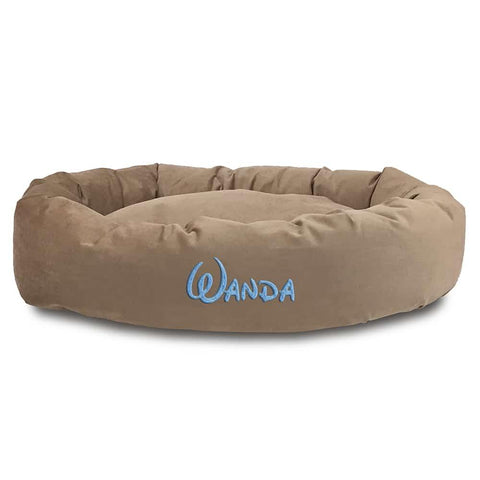
Personalization is primarily about appearance and the pleasure of having something made for your dog. A name on a bed can make it feel special, especially when the bed sits in a family room or is given as a gift. It may also help distinguish beds in a multi-dog household, although dogs do not need embroidery to recognize their favorite resting spots.
A personalized bed is worth considering when you already like the bed's practical features and want a distinctive finishing touch. It should not be chosen over a better-fitting bed simply because the embroidery looks attractive.
13. Common Dog Bed Buying Mistakes to Avoid
Even careful shoppers can overlook details that become obvious only after a bed arrives. These are the mistakes we recommend checking for before checkout.
Mistake 1: Buying by weight alone
A weight range cannot capture body length, width, or sleeping position. Measure your dog and compare the measurements with the usable sleeping area.
Mistake 2: Confusing outside dimensions with sleeping space
A thick bagel edge or bolster can reduce the space in the middle. Check the center dimensions when available, and look at product photographs that show the bed in use.
Mistake 3: Choosing a shape based only on appearance
A round bed may look wonderful in a room, but it may not suit a dog that consistently sleeps fully stretched. Observe your dog before deciding.
Mistake 4: Assuming orthopedic means medically therapeutic
The label does not establish that a bed treats pain or disease. Compare construction and ask a veterinarian about health concerns.
Mistake 5: Overlooking entry height
High bolsters or thick cushions may be inconvenient for some small, older, or mobility-limited dogs. Think about how your dog will enter and exit the bed every day.
Mistake 6: Assuming the entire bed is washable
Sometimes only the cover can go in the washing machine. Read the specific care instructions for the cover, liner, and insert.
Mistake 7: Treating water-resistant as waterproof
A fabric that sheds a little moisture is not necessarily a liquid barrier. Confirm what protection is provided and where.
Mistake 8: Forgetting the room or crate dimensions
A bed can fit the dog and still be wrong for the space. Measure the intended location, including door clearance and walking paths.
Mistake 9: Ignoring replacement options
If a cover becomes worn but the cushion remains useful, a compatible replacement may save money. Check availability before discarding the entire bed.
Mistake 10: Skipping the size guide
If you are uncertain, do not guess based on a breed name. Use the Dog Bed Size Guide and Calculator and compare it with the individual product's dimensions.
14. Frequently Asked Questions About Buying a Dog Bed
What size dog bed should I buy?
Choose a bed that accommodates your dog's normal sleeping positions, including the longest position you see regularly. Compare your measurements with the bed's usable surface. A dog that stretches out may need a longer bed than a dog of similar weight that curls up. Start with the Dog Bed Size Guide.
Is a round or rectangular dog bed better?
Neither shape is universally better. Round bagel beds may appeal to dogs that curl up and like a raised perimeter. Rectangular beds often suit dogs that stretch out or change positions frequently. The best shape is the one that fits your dog's habits and provides enough usable space.
Does my dog need an orthopedic bed?
Not every dog needs a foam-based bed. Some prefer soft fiberfill, while others settle better on a more structured surface. Consider your dog's age, preferences, and how the bed is constructed. Ask your veterinarian for advice if you are choosing bedding in response to pain or mobility changes.
Are waterproof dog beds completely waterproof?
Not necessarily. Some products use a waterproof inner liner, while the outer cover is only water-resistant. Seams, zippers, and care requirements may affect protection. Read the exact product description to understand which components are protected.
How often should I replace my dog's bed?
There is no universal schedule. Replace or repair bedding when the cushion no longer maintains its intended shape, the cover is badly damaged, or the bed cannot be cleaned adequately. If only the cover is worn, consider a compatible replacement first. Read Replacement Dog Bed Cover or New Bed?.
15. Your Dog Bed Shopping Checklist
Before placing an order, run through this short checklist:
- I measured my dog and considered the longest sleeping position.
- I checked the usable sleeping area, not just the outside dimensions.
- I chose a shape that matches how my dog actually sleeps.
- I reviewed cushion construction rather than relying on labels alone.
- I checked the entry height and whether the bed will stay in a practical location.
- I confirmed which parts are removable, washable, or moisture-protected.
- I measured the room, crate, or kennel where the bed will be used.
- I reviewed the exact product dimensions, customization options, and care instructions.
If you cannot confidently check the first two boxes, go back to the Majestic Pet Dog Bed Size Guide before choosing a product.
16. Find the Right Dog Bed for Your Dog
The best dog bed is not the one with the most features. It is the bed that gives your dog enough room to rest in a familiar position, uses construction that suits their preferences, and fits the practical needs of your home. For one dog, that might be a plush bagel bed with a roomy center. For another, it might be a flat foam cushion or a precisely measured crate mat.
Start with size. Use the Dog Bed Size Guide and Calculator to narrow your options. Then choose a style. Compare bagel, bolster/lounge, rectangular, orthopedic, and personalized designs based on your dog's sleeping habits. Need an exact crate fit? Explore the Custom Orthopedic Crate Mat and review the measuring instructions before ordering.
If you are deciding between foam and plush fill, visit Memory Foam vs. Fiberfill. If long-term care is your main concern, see How to Wash a Dog Bed and Replacement Dog Bed Cover or New Bed?.
A few minutes spent measuring and comparing construction now can help you make a purchase that works better for your dog and your home.
Ready to compare? Shop all dog beds, browse bagel beds, explore orthopedic beds, or choose a personalized bed.
About Majestic Pet
Majestic Pet is a family-owned pet products company with experience designing and manufacturing pet beds, crate mats, and other pet comfort products. Our aim is to help pet owners make informed choices by explaining fit, construction, care, and practical product differences. We encourage shoppers to compare the specifications of each product rather than relying on general claims or breed stereotypes.